When considering air duct cleaning st paul, many homeowners are surprised to learn just how much hidden buildup affects their daily comfort. Dust, mold spores, pet dander, and debris quietly collect inside your ductwork — and your HVAC system pushes all of it through your living spaces every time it runs.
St. Paul’s harsh winters and humid summers put serious strain on home heating and cooling systems. Because homes run their furnaces for five or more months each year, ducts accumulate contaminants faster than in milder climates. The EPA notes that indoor air can be two to five times more polluted than outdoor air — a gap that matters enormously for families with allergies or asthma.
Moreover, St. Paul has a large stock of older housing built before modern HVAC standards. Addressing ductwork issues early protects both your household health and your HVAC investment. AM Services helps Twin Cities homeowners tackle these problems with professional, thorough service.
In this guide: – Why St. Paul Homes Need Air Duct Cleaning – Signs Your Ducts Are Overdue for Air Duct Cleaning in St Paul – The Professional Duct Cleaning Process Step by Step – DIY vs. Professional Duct Cleaning: What Really Works – St Paul Air Duct Cleaning Service Tiers and Bundles – Frequently Asked Questions
Why St. Paul Homes Need Air Duct Cleaning
St. Paul’s climate creates unique challenges for indoor air quality. Because the city experiences some of the coldest winters in the continental U.S., home heating systems run continuously for months at a time. Consequently, dust, allergens, and debris cycle through ductwork at a higher rate than in warmer regions.
Dirty ducts don’t just affect air quality — they hurt efficiency too. The U.S. Department of Energy estimates that 25–40% of heating and cooling energy is wasted in a typical home. Clogged ducts force your system to work harder, driving up monthly utility bills. However, clean ductwork helps your HVAC run at peak efficiency, and many homeowners notice meaningful energy savings after a professional cleaning.
Older St. Paul homes face additional risks. Many properties in neighborhoods like Summit Hill, Frogtown, and the East Side were built before modern HVAC standards. Their ductwork may have accumulated decades of dust, developed gaps that pull in attic particles, or harbored mold growth from past moisture issues. Furthermore, older insulation materials can shed fibers directly into the air supply — a serious health concern for any household.
For a full overview of what our duct service covers, visit our air duct cleaning page or explore St. Paul-specific service details.
Signs Your Ducts Are Overdue for Air Duct Cleaning in St Paul
In our experience, when scheduling duct cleaning, St. Paul residents often wait too long — and by then, the warning signs are hard to miss. Knowing what to look for can protect your family’s health and keep your HVAC system running efficiently.
First, check your supply and return vents. If you see a visible ring of dust or dark buildup around the vent covers, your ducts are likely overdue for cleaning. Also, watch for dust clouds that puff out when your furnace or AC kicks on. Other visual red flags include:
- Dark streaks or staining around vent grilles or on nearby walls
- Visible mold growth inside or around duct openings
- Debris or insulation particles blowing into rooms
- Pet hair and dander collecting heavily near registers
However, not all signs are visible. Many St. Paul homeowners first notice a problem through health symptoms. For example, increased sneezing, coughing, or allergy flare-ups that improve when you leave home are strong signals. According to the EPA, indoor air can be 2 to 5 times more polluted than outdoor air — and dirty ducts are a major contributor.
In addition to health clues, your HVAC system itself will often signal trouble. Specifically, watch for uneven heating or cooling between rooms, a musty smell when the system runs, and excessive filter clogging that requires changes more than every 30 days. Most homes benefit from professional duct cleaning every 3 to 5 years, though homes with pets, smokers, or recent renovations may need service sooner.
The Professional Duct Cleaning Process Step by Step
Understanding what happens during a professional visit helps you know exactly what you’re getting. The process is thorough, systematic, and far more effective than any DIY approach.
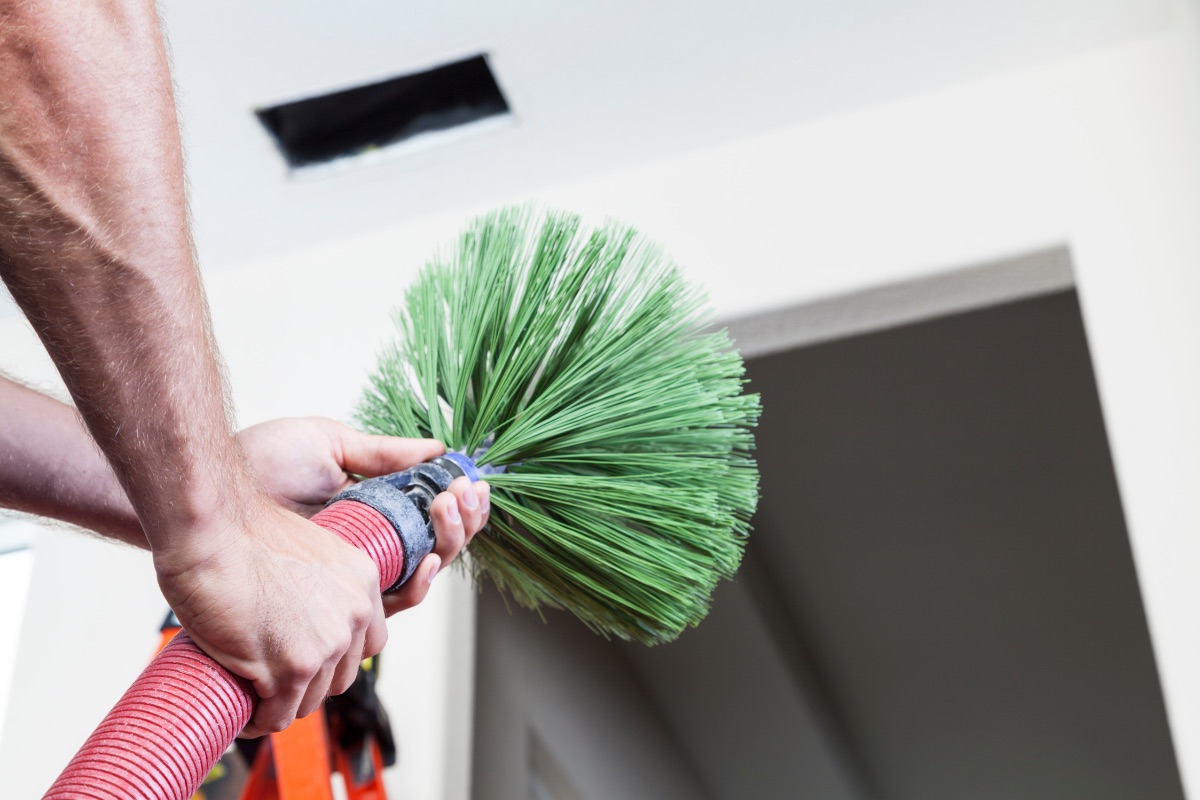
A certified technician begins by inspecting your entire duct system — checking for blockages, mold, damage, and buildup levels. Next, they seal off all registers and vents to create negative pressure inside the ductwork. This containment step is critical because it prevents loosened debris from escaping into your living space during cleaning.
Technicians then connect a commercial-grade vacuum to your main trunk line. The suction power of professional equipment far exceeds anything available to homeowners, making deep cleaning genuinely possible. From there, the agitation phase begins:
- Rotary brushes scrub buildup from duct walls
- Compressed air whips dislodge stubborn debris in hard-to-reach bends
- Hand tools clear registers and grilles individually
- Technicians work from each branch back toward the main trunk
Finally, the technician performs a post-cleaning inspection, often using a camera to confirm results. Many companies also offer an EPA-registered sanitizing treatment to eliminate remaining bacteria and mold spores. The full process typically takes 2–4 hours for an average St. Paul home, depending on system size and contamination level.
Also consider pairing your duct cleaning with dryer vent cleaning — it’s a smart bundle that improves both air quality and fire safety in one visit. In our experience, homeowners who combine services save significant time and get a more complete result.
DIY vs. Professional Duct Cleaning: What Really Works
Our team has seen many homeowners wonder if they can skip the pros and handle duct cleaning themselves. However, the results between DIY and professional service differ dramatically — especially for older Twin Cities homes.
A basic DIY approach usually means vacuuming visible registers and wiping down vent covers. For example, a standard household vacuum simply lacks the suction power to reach deep into duct runs. Most residential ducts extend 10–25 feet or more from each register. Here’s what DIY typically misses:
- Deep debris buildup in main trunk lines
- Mold or microbial growth hidden in bends and joints
- Settled dust near the air handler and coil
- Blockages caused by insulation or pest debris
In fact, the EPA notes that improper cleaning can actually disturb settled contaminants and make indoor air quality worse — not better. Professionals use truck-mounted or high-powered portable vacuums that generate negative pressure throughout the entire duct system. As a result, debris is captured — not just pushed around.
DIY duct maintenance does have its place. First, keep registers dusted and change filters every 60–90 days. However, for a thorough clean, professional service wins every time. For a full breakdown of what’s included, check our air duct cleaning service page or review our pricing before you book.

St Paul Air Duct Cleaning Service Tiers and Bundles
Choosing the right service level matters. However, not every home needs the same scope of work. Use this comparison to find the right fit.
| Service Option | Scope of Work | Best For | Typical Timeframe |
|---|---|---|---|
| Entry-Tier Clean | Main trunk lines only | Newer homes, light buildup | 1–2 hours |
| Standard Whole-Home | All supply & return vents | Most St. Paul homes | 2–3 hours |
| Mid-Tier System Clean | Ducts + blower + coil | Older homes, allergy households | 3–4 hours |
| Upper-Tier Premium Bundle | Full system + dryer vent + chimney | Maximum whole-home air quality | 4–6 hours |
Each step up adds real protection for your home’s air quality. For example, a standard whole-home clean covers every vent room to room. In contrast, a basic clean may miss branch lines where dust and debris collect most. Key inclusions to look for in any tier:
- Negative pressure vacuuming on all accessible ducts
- Blower compartment cleaning to remove motor debris
- Before-and-after documentation for proof of work
- Filter inspection included with service
Bundling services is smart. Because technicians are already on-site, combining dryer vent cleaning with your duct service cuts total visit time. Popular bundles in the St. Paul area include duct + dryer vent cleaning, full system + chimney cleaning, and whole-home air quality packages. For larger buildings, visit our commercial air duct cleaning Minneapolis page for scope-specific details.
Frequently Asked Questions
About This Guide
This guide was researched and drafted with AI assistance, then reviewed for accuracy by the AM Services team. Information reflects local conditions in St. Paul, MN. Last updated July 2026. For questions specific to your situation, contact us directly.